





Still undecided?
Use Coupon Code:
0% Off All Medications

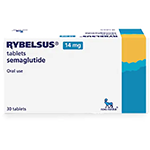
we accept Rybelsus (semaglutide)

Rybelsus (semaglutide)

OZEMPIC is indicated:

  • Availability: In Stock (69 packs)
  • Active Ingredient: semaglutide
Rybelsus (semaglutide), 3mg
Package Per Pill Savings Per Pack Order
10 tabs     $287.33  
30 tabs $27.49  $37.28  $861.99 $824.71  
60 tabs $25.63  $186.38  $1723.98 $1537.60  
Rybelsus (semaglutide), 7mg
Package Per Pill Savings Per Pack Order
10 tabs     $321.49  
30 tabs $31.58  $17.06  $964.47 $947.41  
60 tabs $30.29  $111.77  $1928.94 $1817.17  
Rybelsus (semaglutide), 14mg
Package Per Pill Savings Per Pack Order
10 tabs     $349.44  
30 tabs $33.55  $41.90  $1048.32 $1006.42  

Rybelsus (semaglutide) (Semaglutide)

1 INDICATIONS AND USAGE

OZEMPIC is indicated:

  • •as an adjunct to diet and exercise to improve glycemic control in adults with type 2 diabetes mellitus.
  • •to reduce the risk of major adverse cardiovascular events (cardiovascular death, non-fatal myocardial infarction or non-fatal stroke) in adults with type 2 diabetes mellitus and established cardiovascular disease.
  • •to reduce the risk of sustained eGFR decline, end-stage kidney disease, and cardiovascular death in adults with type 2 diabetes mellitus and chronic kidney disease.

OZEMPIC is a glucagon-like peptide 1 (GLP-1) receptor agonist indicated:

  • •as an adjunct to diet and exercise to improve glycemic control in adults with type 2 diabetes mellitus. (1)
  • •to reduce the risk of major adverse cardiovascular events in adults with type 2 diabetes mellitus and established cardiovascular disease. (1)
  • •to reduce the risk of sustained eGFR decline, end-stage kidney disease and cardiovascular death in adults with type 2 diabetes mellitus and chronic kidney disease. (1)

2 DOSAGE AND ADMINISTRATION

  • •Administer once weekly at any time of day, with or without meals. ( 2.1 )
  • •Start at 0.25 mg once weekly. After 4 weeks, increase the dosage to 0.5 mg once weekly. (2.2)
  • •If additional glycemic control is needed, increase the dosage to 1 mg once weekly after at least 4 weeks on the 0.5 mg dose. (2.2)
  • •If additional glycemic control is needed, increase the dosage to 2 mg once weekly after at least 4 weeks on the 1 mg dosage. (2.2)
  • •To reduce the risk of sustained eGFR decline, end-stage kidney disease and cardiovascular death, increase the dosage to 1 mg once weekly after at least 4 weeks on the 0.5 mg dosage. (1, 2.2)
  • •If a dose is missed, administer within 5 days of missed dose. (2.1)
  • •Inject subcutaneously in the abdomen, thigh, or upper arm. (2.1)

2.1 Important Administration Instructions

  • •Inspect OZEMPIC visually before use. It should appear clear and colorless. Do not use OZEMPIC if particulate matter and coloration is seen.
  • •Administer OZEMPIC once weekly, on the same day each week, at any time of the day, with or without meals.
  • •Inject OZEMPIC subcutaneously in the abdomen, thigh, or upper arm. Instruct patients to use a different injection site each week when injecting in the same body region.
  • •When using OZEMPIC with insulin, instruct patients to administer as separate injections and to never mix the products. It is acceptable to inject OZEMPIC and insulin in the same body region, but the injections should not be adjacent to each other.
  • •The day of weekly administration can be changed if necessary as long as the time between two doses is at least 2 days (>48 hours).
  • •If a dose is missed, administer OZEMPIC as soon as possible within 5 days after the missed dose. If more than 5 days have passed, skip the missed dose and administer the next dose on the regularly scheduled day. In each case, patients can then resume their regular once-weekly dosing schedule.

2.2 Recommended Dosage

Recommended Initiation Dosage

Initiate OZEMPIC with a dosage of 0.25 mg injected subcutaneously once weekly for 4 weeks. Follow the dosage escalation below to reduce the risk of gastrointestinal adverse reactions [see Warnings and Precautions (5.7), Adverse Reactions (6.1)].

After 4 weeks on the 0.25 mg dosage, increase the dosage to 0.5 mg once weekly.

Recommended Maintenance and Maximum Dosages for Glycemic Control

The recommended maintenance dosage is 0.5 mg, 1 mg, or 2 mg, injected subcutaneously once weekly, based on glycemic control.

If additional glycemic control is needed after at least 4 weeks on the:

  • •0.5 mg dosage, the dosage may be increased to 1 mg once weekly.
  • •1 mg dosage, the dosage may be increased to 2 mg once weekly.

The maximum recommended dosage is 2 mg once weekly.

Recommended Maintenance Dosage in Patients with Type 2 Diabetes Mellitus and Chronic Kidney Disease

Increase the dosage to the maintenance dosage, 1 mg once weekly, after at least 4 weeks on the 0.5 mg dosage.

4 CONTRAINDICATIONS

OZEMPIC is contraindicated in patients with:

  • •A personal or family history of MTC or in patients with MEN 2 [see Warnings and Precautions (5.1)].
  • •A serious hypersensitivity reaction to semaglutide or to any of the excipients in OZEMPIC. Serious hypersensitivity reactions including anaphylaxis and angioedema have been reported with OZEMPIC [see Warnings and Precautions ( 5.8 )].
  • •Personal or family history of MTC or in patients with MEN 2. (4)
  • •Serious hypersensitivity reaction to semaglutide or any of the excipients in OZEMPIC. (4)

5 WARNINGS AND PRECAUTIONS

  • Acute Pancreatitis: Has been observed in patients treated with GLP-1 receptor agonists, including OZEMPIC. Discontinue if pancreatitis is suspected. (5.2)
  • Diabetic Retinopathy Complications: Has been reported in a clinical trial. Patients with a history of diabetic retinopathy should be monitored. (5.3)
  • Never share an OZEMPIC pen between patients, even if the needle is changed. (5.4)
  • Hypoglycemia: Concomitant use with an insulin secretagogue or insulin may increase the risk of hypoglycemia, including severe hypoglycemia. Reducing dose of insulin secretagogue or insulin may be necessary. (5.5)
  • Acute Kidney Injury Due to Volume Depletion: Monitor renal function in patients reporting adverse reactions that could lead to volume depletion. (5.6)
  • Severe Gastrointestinal Adverse Reactions: Use has been associated with gastrointestinal adverse reactions, sometimes severe. OZEMPIC is not recommended in patients with severe gastroparesis. (5.7)
  • Hypersensitivity Reactions: Serious hypersensitivity reactions (e.g., anaphylaxis and angioedema) have been reported. Discontinue OZEMPIC if suspected and promptly seek medical advice. (5.8)
  • Acute Gallbladder Disease: If cholelithiasis or cholecystitis are suspected, gallbladder studies are indicated. (5.9)
  • Pulmonary Aspiration During General Anesthesia or Deep Sedation: Has been reported in patients receiving GLP-1 receptor agonists undergoing elective surgeries or procedures. Instruct patients to inform healthcare providers of any planned surgeries or procedures. (5.10)

5.1 Risk of Thyroid C-Cell Tumors

In mice and rats, semaglutide caused a dose-dependent and treatment-duration-dependent increase in the incidence of thyroid C-cell tumors (adenomas and carcinomas) after lifetime exposure at clinically relevant plasma exposures [see Nonclinical Toxicology (13.1)]. It is unknown whether OZEMPIC causes thyroid C-cell tumors, including MTC, in humans as human relevance of semaglutide-induced rodent thyroid C-cell tumors has not been determined.

Cases of MTC in patients treated with liraglutide, another GLP-1 receptor agonist, have been reported in the postmarketing period; the data in these reports are insufficient to establish or exclude a causal relationship between MTC and GLP-1 receptor agonist use in humans.

OZEMPIC is contraindicated in patients with a personal or family history of MTC or in patients with MEN 2. Counsel patients regarding the potential risk for MTC with the use of OZEMPIC and inform them of symptoms of thyroid tumors (e.g., a mass in the neck, dysphagia, dyspnea, persistent hoarseness).

Routine monitoring of serum calcitonin or using thyroid ultrasound is of uncertain value for early detection of MTC in patients treated with OZEMPIC. Such monitoring may increase the risk of unnecessary procedures, due to the low-test specificity for serum calcitonin and a high background incidence of thyroid disease. Significantly elevated serum calcitonin value may indicate MTC and patients with MTC usually have calcitonin values >50 ng/L. If serum calcitonin is measured and found to be elevated, the patient should be further evaluated. Patients with thyroid nodules noted on physical examination or neck imaging should also be further evaluated.

5.2 Acute Pancreatitis

Acute pancreatitis, including fatal and non-fatal hemorrhagic or necrotizing pancreatitis, has been observed in patients treated with GLP-1 receptor agonists, including OZEMPIC [see Adverse Reactions (6)].

After initiation of OZEMPIC, observe patients carefully for signs and symptoms of acute pancreatitis, which may include persistent or severe abdominal pain (sometimes radiating to the back), and which may or may not be accompanied by nausea or vomiting. If pancreatitis is suspected, discontinue OZEMPIC and initiate appropriate management.

5.3 Diabetic Retinopathy Complications

In a 2-year trial involving patients with type 2 diabetes and high cardiovascular risk, more events of diabetic retinopathy complications occurred in patients treated with OZEMPIC (3.0%) compared to placebo (1.8%). The absolute risk increase for diabetic retinopathy complications was larger among patients with a history of diabetic retinopathy at baseline (OZEMPIC 8.2%, placebo 5.2%) than among patients without a known history of diabetic retinopathy (OZEMPIC 0.7%, placebo 0.4%).

Rapid improvement in glucose control has been associated with a temporary worsening of diabetic retinopathy. The effect of long-term glycemic control with semaglutide on diabetic retinopathy complications has not been studied. Patients with a history of diabetic retinopathy should be monitored for progression of diabetic retinopathy.

5.4 Never Share an OZEMPIC Pen Between Patients

OZEMPIC pens must never be shared between patients, even if the needle is changed. Pen-sharing poses a risk for transmission of blood-borne pathogens.

5.5 Hypoglycemia with Concomitant Use of Insulin Secretagogues or Insulin

Patients receiving OZEMPIC in combination with an insulin secretagogue (e.g., sulfonylurea) or insulin may have an increased risk of hypoglycemia, including severe hypoglycemia [see Adverse Reactions (6.1), Drug Interactions (7)].

The risk of hypoglycemia may be lowered by a reduction in the dose of sulfonylurea (or other concomitantly administered insulin secretagogue) or insulin. Inform patients using these concomitant medications of the risk of hypoglycemia and educate them on the signs and symptoms of hypoglycemia.

5.6 Acute Kidney Injury Due to Volume Depletion

There have been postmarketing reports of acute kidney injury, in some cases requiring hemodialysis, in patients treated with semaglutide. The majority of the reported events occurred in patients who experienced gastrointestinal reactions leading to dehydration such as nausea, vomiting, or diarrhea [see Adverse Reactions (6.1)]. Monitor renal function in patients reporting adverse reactions to OZEMPIC that could lead to volume depletion, especially during dosage initiation and escalation of OZEMPIC.

5.7 Severe Gastrointestinal Adverse Reactions

Use of OZEMPIC has been associated with gastrointestinal adverse reactions, sometimes severe [see Adverse Reactions ( 6 )] . In OZEMPIC clinical trials, severe gastrointestinal adverse reactions were reported more frequently among patients receiving OZEMPIC (0.5 mg 0.4%, 1 mg 0.8%) than placebo (0%). Severe gastrointestinal adverse reactions have also been reported postmarketing with GLP-1 receptor agonists.

OZEMPIC is not recommended in patients with severe gastroparesis.

5.8 Hypersensitivity Reactions

Serious hypersensitivity reactions (e.g., anaphylaxis, angioedema) have been reported in patients treated with OZEMPIC. If hypersensitivity reactions occur, discontinue use of OZEMPIC; treat promptly per standard of care, and monitor until signs and symptoms resolve. Do not use in patients with a previous hypersensitivity to OZEMPIC [see Contraindications (4), Adverse Reactions (6.2)].

Anaphylaxis and angioedema have been reported with other GLP-1 receptor agonists. Use caution in a patient with a history of angioedema or anaphylaxis with another GLP-1 receptor agonist because it is unknown whether such patients will be predisposed to anaphylaxis with OZEMPIC.

5.9 Acute Gallbladder Disease

Acute events of gallbladder disease such as cholelithiasis or cholecystitis have been reported in GLP-1 receptor agonist trials and postmarketing. In placebo-controlled trials, cholelithiasis was reported in 1.5% and 0.4% of patients-treated with OZEMPIC 0.5 mg and 1 mg, respectively. Cholelithiasis was not reported in placebo-treated patients. If cholelithiasis is suspected, gallbladder studies and appropriate clinical follow-up are indicated.

5.10 Pulmonary Aspiration During General Anesthesia or Deep Sedation

OZEMPIC delays gastric emptying [see Clinical Pharmacology (12.2)]. There have been rare postmarketing reports of pulmonary aspiration in patients receiving GLP-1 receptor agonists undergoing elective surgeries or procedures requiring general anesthesia or deep sedation who had residual gastric contents despite reported adherence to preoperative fasting recommendations.

Available data are insufficient to inform recommendations to mitigate the risk of pulmonary aspiration during general anesthesia or deep sedation in patients taking OZEMPIC, including whether modifying preoperative fasting recommendations or temporarily discontinuing OZEMPIC could reduce the incidence of retained gastric contents. Instruct patients to inform healthcare providers prior to any planned surgeries or procedures if they are taking OZEMPIC.

6 ADVERSE REACTIONS

The following serious adverse reactions are described below or elsewhere in the prescribing information:

  • •Risk of Thyroid C-cell Tumors [see Warnings and Precautions (5.1)]
  • •Acute Pancreatitis [see Warnings and Precautions (5.2)]
  • •Diabetic Retinopathy Complications [see Warnings and Precautions (5.3)]
  • •Hypoglycemia with Concomitant Use of Insulin Secretagogues or Insulin [see Warnings and Precautions (5.5)]
  • •Acute Kidney Injury Due to Volume Depletion [see Warnings and Precautions (5.6)]
  • •Severe Gastrointestinal Adverse Reactions [see Warnings and Precautions (5.7)]
  • •Hypersensitivity Reactions [see Warnings and Precautions ( 5.8 )]
  • •Acute Gallbladder Disease [see Warnings and Precautions (5.9)]
  • •Pulmonary Aspiration During General Anesthesia or Deep Sedation [see Warnings and Precautions (5.10)]

The most common adverse reactions reported in ≥5% of patients treated with OZEMPIC are: nausea, vomiting, diarrhea, abdominal pain and constipation. (6.1)

To report SUSPECTED ADVERSE REACTIONS, contact Novo Nordisk Inc., at 1-888-693-6742 or FDA at 1-800-FDA-1088 or http://www.fda.gov/medwatch

6.1 Clinical Trials Experience

Because clinical trials are conducted under widely varying conditions, adverse reaction rates observed in the clinical trials of a drug cannot be directly compared to rates in the clinical trials of another drug and may not reflect the rates observed in practice.

Pool of Placebo-Controlled Trials

The data in Table 1 are derived from 2 placebo-controlled trials (1 monotherapy trial and 1 trial in combination with basal insulin) in patients with type 2 diabetes [see Clinical Studies (14)]. These data reflect exposure of 521 patients to OZEMPIC and a mean duration of exposure to OZEMPIC of 32.9 weeks. Across the treatment arms, the mean age of patients was 56 years, 3.4% were 75 years or older and 55% were male. In these trials 71% were White, 7% were Black or African American, and 19% were Asian; 21% identified as Hispanic or Latino ethnicity. At baseline, patients had type 2 diabetes for an average of 8.8 years and had a mean HbA1c of 8.2%. At baseline, 8.9% of the population reported retinopathy. Baseline estimated renal function was normal (eGFR ≥90 mL/min/1.73m2) in 57.2%, mildly impaired (eGFR 60 to 90 mL/min/1.73m2) in 35.9% and moderately impaired (eGFR 30 to 60 mL/min/1.73m2) in 6.9% of patients.

Pool of Placebo- and Active-Controlled Trials

The occurrence of adverse reactions was also evaluated in a larger pool of patients with type 2 diabetes

participating in 7 placebo- and active-controlled glycemic control trials [see Clinical Studies (14)] including two trials in Japanese patients evaluating the use of OZEMPIC as monotherapy and add-on therapy to oral medications or insulin. In this pool, a total of 3150 patients with type 2 diabetes were treated with OZEMPIC for a mean duration of 44.9 weeks. Across the treatment arms, the mean age of patients was 57 years, 3.2% were 75 years or older and 57% were male. In these trials, 60% were White, 6% were Black or African American, and 31% were Asian; 16% identified as Hispanic or Latino ethnicity. At baseline, patients had type 2 diabetes for an average of 8.2 years and had a mean HbA1c of 8.2%. At baseline, 7.8% of the population reported retinopathy. Baseline estimated renal function was normal (eGFR ≥90 mL/min/1.73m2) in 63.1%, mildly impaired (eGFR 60 to 90 mL/min/1.73m2) in 34.3%, and moderately impaired (eGFR 30 to 60 mL/min/1.73m2) in 2.5% of the patients.

Common Adverse Reactions

Table 1 shows common adverse reactions, excluding hypoglycemia, associated with the use of OZEMPIC in the pool of placebo-controlled trials. These adverse reactions occurred more commonly on OZEMPIC than on placebo and occurred in at least 5% of patients treated with OZEMPIC.

Table 1. Adverse Reactions in Placebo-Controlled Trials Reported in ≥5% of OZEMPIC-Treated Patients with Type 2 Diabetes Mellitus

Adverse Reaction

Placebo (N=262)

%

OZEMPIC 0.5 mg

(N=260)

%

OZEMPIC 1 mg

(N=261)

%

Nausea

6.1

15.8

20.3

Vomiting

2.3

5

9.2

Diarrhea

1.9

8.5

8.8

Abdominal pain

4.6

7.3

5.7

Constipation

1.5

5

3.1

In the pool of placebo- and active-controlled trials and in the 2-year cardiovascular outcomes trial, the types and frequency of common adverse reactions, excluding hypoglycemia, were similar to those listed in Table 1.

In a clinical trial with 959 patients treated with OZEMPIC 1 mg or OZEMPIC 2 mg as add-on to metformin with or without sulfonylurea treatment for 40 weeks, no new safety signals were identified.

In the FLOW trial [see Clinical Studies (14.3)] in patients with type 2 diabetes mellitus and chronic kidney disease, safety data collection was limited to serious adverse events and selected predefined categories of adverse events regardless of seriousness. There were no new serious or severe adverse reactions identified in this trial.

Gastrointestinal Adverse Reactions

In the pool of placebo-controlled trials, gastrointestinal adverse reactions occurred more frequently among patients receiving OZEMPIC than placebo (placebo 15.3%, OZEMPIC 0.5 mg 32.7%, OZEMPIC 1 mg 36.4%). The majority of reports of nausea, vomiting, and/or diarrhea occurred during dose escalation. More patients receiving OZEMPIC 0.5 mg (3.1%) and OZEMPIC 1 mg (3.8%) discontinued treatment due to gastrointestinal adverse reactions than patients receiving placebo (0.4%).

In the trial with OZEMPIC 1 mg and 2 mg, gastrointestinal adverse reactions occurred more frequently among patients receiving OZEMPIC 2 mg (34%) vs OZEMPIC 1 mg (30.8%).

  1.  In addition to the reactions in Table 1, the following gastrointestinal adverse reactions with a frequency of <5% were associated with OZEMPIC (frequencies listed, respectively, as: placebo; 0.5 mg; 1 mg): dyspepsia (1.9%, 3.5%, 2.7%), eructation (0%, 2.7%, 1.1%), flatulence (0.8%, 0.4%, 1.5%), gastroesophageal reflux disease (0%, 1.9%, 1.5%), and gastritis (0.8%, 0.8%, 0.4%).

Other Adverse Reactions

Hypoglycemia

Table 2 summarizes the incidence of events related to hypoglycemia by various definitions in the placebo-controlled trials.

Table 2. Hypoglycemia Adverse Reactions in Placebo-Controlled Trials in Patients with Type 2 Diabetes Mellitus

Placebo

OZEMPIC 0.5 mg

OZEMPIC 1 mg

Monotherapy

  1.   (30 weeks)

N=129

N=127

N=130

  1.  Severe

0%

0%

0%

  1.  Documented symptomatic (≤70 mg/dL glucose threshold)

0%

1.6%

3.8%

  1.  Severe or Blood Glucose Confirmed Symptomatic (≤56 mg/dL glucose threshold)

1.6%

0%

0%

Add-on to Basal Insulin with or without Metformin

  1.   (30 weeks)

N=132

N=132

N=131

  1.  Severe

0%

0%

1.5%

  1.  Documented symptomatic (≤70 mg/dL glucose threshold)

15.2%

16.7%

29.8%

  1.  Severe or Blood Glucose Confirmed Symptomatic (≤56 mg/dL glucose threshold)

5.3%

8.3%

10.7%

“Severe” hypoglycemia adverse reactions are episodes requiring the assistance of another person.

Hypoglycemia was more frequent when OZEMPIC was used in combination with a sulfonylurea [see Warnings and Precautions (5.5), Clinical Studies (14)]. Severe hypoglycemia occurred in 0.8% and 1.2% of patients when OZEMPIC 0.5 mg and 1 mg, respectively, was coadministered with a sulfonylurea.

Documented symptomatic hypoglycemia occurred in 17.3% and 24.4% of patients when OZEMPIC 0.5 mg and 1 mg, respectively, was coadministered with a sulfonylurea. Severe or blood glucose confirmed symptomatic hypoglycemia occurred in 6.5% and 10.4% of patients when OZEMPIC 0.5 mg and 1 mg, respectively, was coadministered with a sulfonylurea.

Injection Site Reactions

In placebo-controlled trials, injection site reactions (e.g., injection-site discomfort, erythema) were reported in 0.2% of OZEMPIC-treated patients.

Increases in Amylase and Lipase

In placebo-controlled trials, patients exposed to OZEMPIC had a mean increase from baseline in amylase of 13% and lipase of 22%. These changes were not observed in placebo-treated patients.

Acute Pancreatitis

In glycemic control trials, acute pancreatitis was confirmed by adjudication in 7 OZEMPIC-treated patients (0.3 cases per 100 patient years) versus 3 in comparator-treated patients (0.2 cases per 100 patient years).

Cholelithiasis

In placebo-controlled trials, cholelithiasis was reported in 1.5% and 0.4% of patients-treated with OZEMPIC 0.5 mg and 1 mg, respectively. Cholelithiasis was not reported in placebo-treated patients.

Increases in Heart Rate

In placebo-controlled trials, OZEMPIC 0.5 mg and 1 mg resulted in a mean increase in heart rate of 2 to 3 beats per minute. There was a mean decrease in heart rate of 0.3 beats per minute in placebo-treated patients.

Fatigue, Dysgeusia and Dizziness

Other adverse reactions with a frequency of >0.4% were associated with OZEMPIC include fatigue, dysgeusia and dizziness.

6.2 Postmarketing Experience

The following adverse reactions have been reported during post-approval use of semaglutide, the active ingredient of OZEMPIC. Because these reactions are reported voluntarily from a population of uncertain size, it is not always possible to reliably estimate their frequency or establish a causal relationship to drug exposure.

Gastrointestinal: acute pancreatitis and necrotizing pancreatitis, sometimes resulting in death; ileus, intestinal obstruction, severe constipation including fecal impaction

Hypersensitivity:anaphylaxis, angioedema, rash, urticaria

Hepatobiliary:cholecystitis, cholecystectomy

Neurologic:dysesthesia, headache

Pulmonary: Pulmonary aspiration has occurred in patients receiving GLP-1 receptor agonists undergoing elective surgeries or procedures requiring general anesthesia or deep sedation.

Renal: acute kidney injury

Skin and Subcutaneous Tissue:alopecia