





Still undecided?
Use Coupon Code:
0% Off All Medications

we accept Rizact

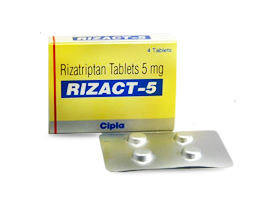
Rizact

RizaFilm™ is indicated for the acute treatment of migraine with or without aura in adults and in pediatric patients 6 to 17 years of age

  • Availability: In Stock (85 packs)
  • Active Ingredient: rizatriptan
Rizact, 5mg
Package Per Pill Savings Per Pack Order
4 pills     $50.28  
8 pills $10.51  $16.48  $100.56 $84.08  
12 pills $9.83  $32.93  $150.84 $117.91  
24 pills $9.14  $82.29  $301.68 $219.39  
32 pills $8.97  $115.21  $402.24 $287.03  
48 pills $8.80  $181.03  $603.36 $422.33  
Rizact, 10mg
Package Per Pill Savings Per Pack Order
4 pills     $62.22  
8 pills $13.01  $20.36  $124.44 $104.08  
12 pills $12.16  $40.72  $186.66 $145.94  
24 pills $11.31  $101.83  $373.32 $271.49  
32 pills $11.10  $142.55  $497.76 $355.21  
48 pills $10.89  $224.00  $746.64 $522.64  

Rizact (Rizatriptan)

1 INDICATIONS AND USAGE

RizaFilm™ is indicated for the acute treatment of migraine with or without aura in adults and in pediatric patients 6 to 17 years of age.

Limitations of Use

  • RizaFilm should only be used where a clear diagnosis of migraine has been established. If a patient has no response for the first migraine attack treated with RizaFilm, the diagnosis of migraine should be reconsidered before RizaFilm is administered to treat any subsequent attacks.
  • RizaFilm is not indicated for the preventive treatment of migraine.
  • Safety and effectiveness of RizaFilm have not been established for cluster headache.

RizaFilm is a serotonin (5-HT) 1B/1D receptor agonist (triptan) indicated for the acute treatment of migraine with or without aura in adults and in pediatric patients 6 to 17 years of age (1)

Limitations of Use:

  • Use only after a clear diagnosis of migraine has been established (1)
  • Not indicated for the preventive treatment of migraine (1)
  • Not indicated for the treatment of cluster headache (1)
  • RizaFilm is administered on the tongue (2.1)
  • Adults: 10 mg single dose; separate repeat doses by at least two hours; maximum cumulative dosage in a 24-hour period is 30 mg (2.1)
  • Pediatric patients 6 to 17 years of age: 5 mg single dose in patients less than 40 kg (88 lb); 10 mg single dose in patients 40 kg (88 lb) or more. (2.2)

2.1 Dosing Information in Adults

The recommended dose of RizaFilm in adults is 10 mg administered on the tongue. The maximum cumulative dose that may be given in 24 hours is 30 mg, with doses separated by at least 2 hours. The safety of treating, on average, more than four headaches in a 30-day period has not been established.

2.2 Dosing Information in Pediatric Patients (6 to 17 Years of Age)

Dosing in pediatric patients is based on the patient's body weight. The recommended dose of RizaFilm is 5 mg in patients weighing less than 40 kg (88 lb), and 10 mg in patients weighing 40 kg (88 lb) or more administered on the tongue.

The efficacy and safety of treatment with more than one dose of RizaFilm within 24 hours in pediatric patients 6 to 17 years of age have not been established.

2.3 Administration of RizaFilm Oral Films

For RizaFilm oral films, administration with liquid is not necessary. Oral films are packaged individually in child-resistant aluminum pouches with a tear notch. To open the pouch, fold on the dotted line and tear open at the notch. Place the oral film on the tongue, where it will disintegrate within approximately two minutes and can be swallowed with saliva.

4 CONTRAINDICATIONS

RizaFilm is contraindicated in patients with:

  • History of ischemic heart disease or coronary artery vasospasm (4)
  • History of stroke or transient ischemic attack (4)
  • Wolff-Parkinson-White syndrome or other cardiac accessory conduction pathway disorders (4)
  • Peripheral vascular disease (4)
  • Ischemic bowel disease (4)
  • Uncontrolled hypertension (4)
  • Recent (within 24 hours) use of another 5-HT 1 agonist (e.g., another triptan), or of an ergotamine-containing medication (4)
  • Hemiplegic or basilar migraine (4)
  • MAO-A inhibitor used in the past 2 weeks (4)
  • Co-administration with propranolol (4)
  • Hypersensitivity to rizatriptan or any of the ingredients of RizaFilm (4)

5 WARNINGS AND PRECAUTIONS

  • Myocardial ischemia, myocardial infarction, and Prinzmetal's angina: Perform cardiac evaluation in patients with multiple cardiovascular risk factors (5.1)
  • Arrhythmias: Discontinue dosing if occurs (5.2)
  • Chest/throat/neck/jaw pain, tightness, pressure, or heaviness; Generally not associated with myocardial ischemia; Evaluate patients at high risk (5.3)
  • Cerebral hemorrhage, subarachnoid hemorrhage, and stroke: Discontinue dosing if occurs (5.4)
  • Gastrointestinal ischemic events, peripheral vasospastic reactions: Discontinue dosing if occurs (5.5)
  • Hypersensitivity Reactions: angioedema and anaphylaxis have occurred (5.6)
  • Medication overuse headache: Detoxification may be necessary (5.7)
  • Serotonin syndrome: Discontinue dosing if occurs (5.8)

5.1 Myocardial Ischemia, Myocardial Infarction, and Prinzmetal's Angina

RizaFilm should not be given to patients with ischemic or vasospastic coronary artery disease. There have been rare reports of serious cardiac adverse reactions, including acute myocardial infarction, occurring within a few hours following administration of rizatriptan benzoate. Some of these reactions occurred in patients without known coronary artery disease (CAD). 5-HT1 agonists, including RizaFilm may cause coronary artery vasospasm (Prinzmetal's Angina), even in patients without a history of CAD.

Perform a cardiovascular evaluation in triptan-naïve patients who have multiple cardiovascular risk factors (e.g., increased age, diabetes, hypertension, smoking, obesity, strong family history of CAD) before receiving RizaFilm. If there is evidence of CAD or coronary artery vasospasm, RizaFilm is contraindicated. For patients with multiple cardiovascular risk factors who have a negative cardiovascular evaluation, consider administering the first RizaFilm dose in a medically supervised setting and performing an electrocardiogram (ECG) immediately following RizaFilm administration. For such patients, consider periodic cardiovascular evaluation in intermittent long-term users of RizaFilm.

5.2 Arrhythmias

Life-threatening disturbances of cardiac rhythm, including ventricular tachycardia and ventricular fibrillation leading to death, have been reported within a few hours following the administration of 5-HT1 agonists. Discontinue RizaFilm if these disturbances occur. RizaFilm is contraindicated in patients with Wolff-Parkinson-White syndrome or arrhythmias associated with other cardiac accessory conduction pathway disorder.

5.3 Chest, Throat, Neck, and/or Jaw Pain/Tightness/Pressure

Sensations of tightness, pain, pressure, and heaviness in the precordium, throat, neck, and jaw commonly occur after treatment with rizatriptan, the active moiety in RizaFilm, and are usually noncardiac in origin. However, perform a cardiac evaluation if these patients are at a high cardiac risk. The use of RizaFilm is contraindicated in patients with CAD and those with Prinzmetal's variant angina.

5.4 Cerebrovascular Events

Cerebral hemorrhage, subarachnoid hemorrhage, and stroke have occurred in patients treated with 5-HT1 agonists, and some have resulted in fatalities. In a number of cases, it appears possible that the cerebrovascular events were primary, the 5-HT1 agonist having been administered in the incorrect belief that the symptoms experienced were a consequence of migraine, when they were not. Also, patients with migraine may be at increased risk of certain cerebrovascular events (e.g., stroke, hemorrhage, transient ischemic attack). Discontinue RizaFilm if a cerebrovascular event occurs.

Before treating headaches in patients not previously diagnosed with migraine or in patients who present with atypical symptoms, exclude other potentially serious neurological conditions. RizaFilm is contraindicated in patients with a history of stroke or transient ischemic attack.

5.5 Other Vasospasm Reactions

5-HT 1 agonists, including RizaFilm, may cause non-coronary vasospastic reactions, such as peripheral vascular ischemia, gastrointestinal vascular ischemia and infarction (presenting with abdominal pain and bloody diarrhea), splenic infarction, and Raynaud’s syndrome. In patients who experience symptoms or signs suggestive of non-coronary vasospasm reaction following the use of any 5-HT 1 agonist, rule out the suspected vasospasm reaction before receiving additional RizaFilm doses.

Transient and permanent blindness and significant partial vision loss have been reported with the use of 5-HT 1 agonists. Since visual disorders may be part of a migraine attack, a causal relationship between these events and the use of 5-HT 1 agonists has not been clearly established.

5.6 Hypersensitivity Reactions

Hypersensitivity reactions, including angioedema and anaphylaxis, have occurred in patients receiving rizatriptan, the active moiety in RizaFilm. Such reactions can be life-threatening or fatal. In general, anaphylactic reactions to drugs are more likely to occur in individuals with a history of sensitivity to multiple allergens. RizaFilm is contraindicated in patients with a history of hypersensitivity reaction to rizatriptan.

5.7 Medication Overuse Headache

Overuse of acute migraine drugs (e.g., ergotamine, triptans, opioids, or a combination of drugs for 10 or more days per month) may lead to exacerbation of headache (medication overuse headache). Medication overuse headache may present as migraine-like daily headaches, or as a marked increase in the frequency of migraine attacks. Detoxification of patients, including withdrawal of the overused drugs, and treatment of withdrawal symptoms (which often includes a transient worsening of headache) may be necessary.

5.8 Serotonin Syndrome

Serotonin syndrome may occur with triptans, including RizaFilm, particularly during coadministration with selective serotonin reuptake inhibitors (SSRIs), serotonin norepinephrine reuptake inhibitors (SNRIs), tricyclic antidepressants (TCAs), and MAO inhibitors [see Drug Interactions (7.5) ]. Serotonin syndrome symptoms may include mental status changes (e.g., agitation, hallucinations, coma), autonomic instability (e.g., tachycardia, labile blood pressure, hyperthermia), neuromuscular aberrations (e.g., hyperreflexia, incoordination) and/or gastrointestinal symptoms (e.g., nausea, vomiting, diarrhea). The onset of symptoms can occur within minutes to hours of receiving a new or a greater dose of a serotonergic medication. RizaFilm treatment should be discontinued if serotonin syndrome is suspected [see Drug Interactions (7.4) and Patient Counseling Information (17) ].

5.9 Increase in Blood Pressure

Significant elevation in blood pressure, including hypertensive crisis with acute impairment of organ systems, has been reported on rare occasions in patients with and without a history of hypertension receiving 5-HT1 agonists, including rizatriptan benzoate. In healthy young adult male and female patients who received maximal doses of rizatriptan benzoate (10 mg every 2 hours for 3 doses), slight increases in blood pressure (approximately 2-3 mmHg) were observed. RizaFilm is contraindicated in patients with uncontrolled hypertension [see Contraindications (4) ].

6 ADVERSE REACTIONS

The following serious adverse reactions are discussed in more detail in other sections of the labeling:

The most common adverse reactions in adults were (incidence ≥5% and greater than placebo): asthenia/fatigue, somnolence, pain/pressure sensation, dizziness, and nausea ( 6.1) To report SUSPECTED ADVERSE REACTIONS, contact Gensco Pharma at 1-866-608-6284 or FDA at 1-800-FDA-1088 or www.fda.gov/medwatch

6.1 Clinical Trials Experience

Because clinical studies are conducted under widely varying conditions, adverse reaction rates observed in the clinical studies of a drug cannot be directly compared to rates in the clinical studies of another drug and may not reflect the rates observed in practice.

The studies described below were conducted with rizatriptan benzoate tablets; adverse reactions with RizaFilm are expected to be similar to rizatriptan benzoate tablets.

Adults

Incidence in Controlled Clinical Trials

Adverse reactions to rizatriptan benzoate were assessed in controlled clinical trials that included over 3700 adult patients who received single or multiple doses of rizatriptan benzoate tablets. The most common adverse reactions during treatment with rizatriptan benzoate (≥5% in either treatment group and greater than placebo) were asthenia/fatigue, somnolence, pain/pressure sensation, dizziness, and nausea.

Table 1 lists the adverse reactions (incidence ≥2% and greater than placebo) after a single dose of rizatriptan benzoate in adults.

Table 1: Incidence (≥2% and Greater than Placebo) of Adverse Reactions After a Single Dose of Rizatriptan Benzoate Tablets or Placebo in Adults

% of Patients

Adverse Reactions

Rizatriptan

Benzoate

5 mg

(N=977)

%

Rizatriptan

Benzoate

10 mg

(N=1167)

%

Placebo

(N=627)

%

Atypical Sensations

4

5

4

Paresthesia

3

4

<2

Pain and other Pressure Sensations

6

9

3

Chest Pain:

tightness/pressure and/or heaviness

<2

3

1

Pain, location unspecified

3

3

<2

Neck/throat/jaw:

pain/tightness/pressure

<2

2

1

Regional Pain:

tightness/pressure and/or heaviness

<1

2

0

Digestive

9

13

8

Nausea

4

6

4

Dry Mouth

3

3

1

Neurological

14

20

11

Dizziness

4

9

5

Somnolence

4

8

4

Headache

<2

2

<1

Other

Asthenia/fatigue

4

7

2

The frequencies of adverse reactions in clinical trials did not increase when up to three doses were taken within 24 hours. Adverse reaction frequencies were also unchanged by concomitant use of drugs commonly taken for migraine prophylaxis, oral contraceptives, or analgesics. The incidences of adverse reactions were not affected by age or gender. There were insufficient data to assess the impact of race on the incidence of adverse reactions.

Other Events Observed in Association with the Administration of Rizatriptan Benzoate in Adults

In the following section, the frequencies of less commonly reported adverse events are presented that were not reported in other sections of the labeling. Because the reports include events observed in open studies, the role of rizatriptan benzoate in their causation cannot be reliably determined. Furthermore, variability associated with adverse event reporting, the terminology used to describe adverse events, limit the value of the quantitative frequency estimates provided. Event frequencies are calculated as the number of patients who used rizatriptan benzoate and reported an event divided by the total number of patients exposed to rizatriptan benzoate (N=3716). All reported events occurred at an incidence ≥1%, or are believed to be reasonably associated with the use of the drug. Events are further classified within body system categories and enumerated in order of decreasing frequency using the following definitions: frequent adverse events are those defined as those occurring in at least (>)1/100 patients; infrequent adverse experiences are those occurring in 1/100 to 1/1000 patients; and rare adverse experiences are those occurring in fewer than 1/1000 patients.

   General: Infrequent was facial edema. Rare were syncope and edema/swelling.

   Atypical Sensations: Frequent were warm sensations.

   Cardiovascular: Frequent was palpitation. Infrequent were tachycardia, cold extremities, and bradycardia.

   Digestive: Frequent were diarrhea and vomiting. Infrequent were dyspepsia, tongue edema and abdominal distention.

   Musculoskeletal: Infrequent were muscle weakness, stiffness, myalgia and muscle cramp/spasm.

   Neurological/Psychiatric: Frequent were hypoesthesia, euphoria and tremor. Infrequent were vertigo, insomnia, confusion/disorientation, gait    abnormality, memory impairment, and agitation.

   Respiratory: Frequent was dyspnea. Infrequent was pharyngeal edema.

   Special Senses: Infrequent were blurred vision and tinnitus. Rare was eye swelling.

   Skin and Skin Appendage: Frequent was flushing. Infrequent were sweating, pruritus, rash, and urticaria. Rare was erythema, hot flashes.

Pediatric Patients 6 to 17 Years of Age

Incidence in Controlled Clinical Trials in Pediatric Patients

Adverse reactions to rizatriptan benzoate orally disintegrating tablets were assessed in a controlled clinical trial for the acute treatment of migraine (Study 7) that included a total of 1382 pediatric patients (including those 6-17 years of age), of which 977 (72%) were administered at least one dose of study treatment (rizatriptan benzoate orally disintegrating tablets and/or placebo) [see Clinical Studies (14.2)]. The incidence of adverse reactions reported for pediatric patients in the acute clinical trial was similar in patients who received rizatriptan benzoate tablets to those who received placebo. The adverse reaction pattern in pediatric patients is expected to be similar to that in adults.

Other Events Observed in Association with the Administration of Rizatriptan Benzoate Orally Disintegrating Tablets in Pediatric Patients

In the following section, the frequencies of less commonly reported adverse events are presented. Because the reports include events observed in open studies, the role of rizatriptan benzoate orally disintegrating tablets in their causation cannot be reliably determined. Furthermore, variability associated with adverse event reporting, the terminology used to describe adverse events, limit the value of the quantitative frequency estimates provided.

Event frequencies are calculated as the number of pediatric patients (including those 6 to 17 years of age) who used rizatriptan benzoate orally disintegrating tablets and reported an event divided by the total number of patients exposed to rizatriptan benzoate orally disintegrating tablets (N=1068). All reported events occurred at an incidence ≥1%, or are believed to be reasonably associated with the use of the drug. Events are further classified within system organ class and enumerated in order of decreasing frequency using the following definitions: frequent adverse events are those occurring in (>)1/100 pediatric patients; infrequent adverse experiences are those occurring in 1/100 to 1/1000 pediatric patients, and rare adverse experiences are those occurring in fewer than 1/1000 patients.

General: Frequent was fatigue.

Ear and labyrinth disorders: Infrequent was hypoacusis.

Gastrointestinal disorders: Frequent was abdominal discomfort.

Nervous system disorders: Infrequent were coordination abnormal, disturbance in attention, and presyncope.

Psychiatric disorders: Infrequent was hallucination.

6.2 Postmarketing Experience

The following adverse reactions have been identified during postapproval use of rizatriptan. Because these reactions are reported voluntarily from a population of uncertain size, it is not always possible to reliably estimate their frequency or establish a causal relationship to drug exposure.

Neurological/Psychiatric: Seizure.

General: Allergic conditions including anaphylaxis/anaphylactoid reaction, angioedema, wheezing, and toxic epidermal necrolysis [see Contraindications (4) ].

Special Senses: Dysgeusia.