





we accept
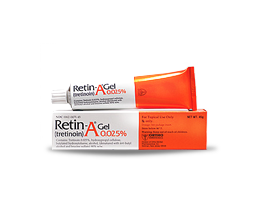
Retin-a Gel 0.1
Tretinoin capsules are indicated for the induction of remission in adults and pediatric patients 1 year of age and older with acute promyelocytic leukemia (APL) characterized by the presence of the t(15;17) translocation or PML/RARα gene expression, and who are refractory to or who have relapsed from anthracycline chemotherapy or for whom anthracycline-based chemotherapy is contraindicated
- Availability: In Stock (70 packs)
- Active Ingredient: tretinoin
- Analogs of Retin-a Gel 0.1
- Retino A Cream 0.025,
- Retino A Cream 0.05,
- Accutane
| Package | Per Pill | Savings | Per Pack | Order |
|---|---|---|---|---|
| 3 tubes | $70.56 | |||
| 10 tubes | $17.13 | $63.91 | $235.20 $171.29 | |
| 15 tubes | $16.21 | $109.58 | $352.80 $243.22 | |
| 20 tubes | $15.76 | $155.23 | $470.40 $315.17 |
Retin-a Gel 0.1 (Tretinoin)
1 INDICATIONS AND USAGE
Tretinoin capsules are indicated for the induction of remission in adults and pediatric patients 1 year of age and older with acute promyelocytic leukemia (APL) characterized by the presence of the t(15;17) translocation or PML/RARα gene expression, and who are refractory to or who have relapsed from anthracycline chemotherapy or for whom anthracycline-based chemotherapy is contraindicated.
Tretinoin capsules are a retinoid indicated for induction of remission in adults and pediatric patients 1 year of age and older with acute promyelocytic leukemia (APL), characterized by presence of t(15;17) translocation or presence of PML/RARα gene expression, and who are refractory to or who have relapsed from anthracycline chemotherapy or for whom anthracycline-based chemotherapy is contraindicated.
2 DOSAGE AND ADMINISTRATION
2.1 Important Safety Information
Verify pregnancy status in females of reproductive potential prior to initiating tretinoin capsules. Females of reproductive potential must have a negative pregnancy test before initiating
tretinoin capsules [see Use in Specific Populations (8.3)].
2.2 Recommended Dosage
The recommended dosage of tretinoin capsules is 22.5 mg/m2 orally twice daily until complete remission is documented. Discontinue tretinoin capsules 30 days after achievement of
complete remission or after 90 days of treatment, whichever occurs first.
Discontinue tretinoin capsules if the t(15;17) translocation or PML/RARα fusion has not been identified [see Warnings and Precautions (5.3)].
Take tretinoin capsules with a meal.
Swallow tretinoin capsules whole with water. Do not chew, dissolve, or open capsule.
Do not take a missed dose of tretinoin capsules unless it is more than 10 hours until the next scheduled dose.
If vomiting occurs after tretinoin capsules administration, do not take an additional dose, but continue with the next scheduled dose.
4 CONTRAINDICATIONS
Tretinoin capsules are contraindicated in patients with a known hypersensitivity to tretinoin capsules, any of its components, or other retinoids. Reactions have included rash, pruritus, face edema, and dyspnea [see Adverse Reactions (6.1)].
Hypersensitivity to tretinoin capsules, any of its components, or other retinoids
5 WARNINGS AND PRECAUTIONS
- • Patients Without t(15;17) Translocation or PML/RARα Fusion: Tretinoin capsules may be initiated based on morphological diagnosis of APL. Confirm diagnosis by detection of the t(15;17) translocation or PML/RARα fusion. (5.3)
- • Leukocytosis: Consider administering cytoreductive chemotherapy (including an anthracycline if not contraindicated or hydroxyurea) with tretinoin capsules in the setting of leukocytosis, as clinically indicated. (5.4)
- • Intracranial Hypertension: Tretinoin capsules have been associated with benign intracranial hypertension, especially in pediatric patients. Consider interruption, dose reduction, or discontinuation of tretinoin capsules as appropriate. (5.5)
- • Lipid Abnormalities: Patients experienced hypercholesterolemia and/or hypertriglyceridemia, which may be reversible upon completion of treatment. Monitor fasting triglycerides and cholesterol at baseline and periodically during treatment. (5.6)
- • Hepatotoxicity: Monitor liver function test results at baseline and during treatment as clinically indicated. (5.7)
- • Thromboembolic Events: Venous and arterial events have been reported; these events may occur during the first month of treatment with tretinoin capsules. (5.8, 7.4)
5.1 Embryo-Fetal Toxicity
Tretinoin capsules can cause embryo-fetal loss and malformations when administered to a pregnant woman. Tretinoin capsules are a retinoid and there is an increased risk of major congenital malformations, spontaneous abortions and premature births following exposure to retinoids during pregnancy in humans. Tretinoin has teratogenic and embryotoxic effects in mice, rats, hamsters, rabbits and pigtail monkeys at doses less than the human dose on a mg/m2 basis.
Advise pregnant women of the potential risk to a fetus. Advise females of reproductive potential to use 2 effective methods of contraception during treatment with tretinoin capsules and for 1 month following the last dose. Advise males with female partners of reproductive potential to use effective contraception during treatment with tretinoin capsules and for 1 week following the last dose [see Use in Specific Populations (8.1, 8.3)].
5.2 Differentiation Syndrome
Differentiation Syndrome, which may be life-threatening or fatal, occurred in about 26% of patients with APL who received tretinoin capsules [see Adverse Reactions (6.1)]. Symptoms
include fever, dyspnea, acute respiratory distress, weight gain, radiographic pulmonary infiltrates, pleural and pericardial effusions, edema, and hepatic, renal, and multi-organ failure. This
syndrome has been accompanied by impaired myocardial contractility and episodic hypotension and it has been observed with or without concomitant leukocytosis. This syndrome generally occurs
during the first month of treatment, as early as following the first dose. Endotracheal intubation and mechanical ventilation were required in some cases due to progressive hypoxemia and several
patients have died with multi-organ failure.
At the first signs or symptoms of this syndrome, immediately administer dexamethasone 10 mg intravenously every 12 hours until signs and symptoms have abated for at least 3 days and initiate hemodynamic monitoring until resolution of signs and symptoms. Consider withholding tretinoin capsules for moderate and severe differentiation syndrome until resolution [see Adverse Reactions (6.1)].
5.3 Patients Without t(15;17) Translocation or PML/RARα Fusion
Tretinoin capsules may be initiated based on the morphological diagnosis of acute promyelocytic leukemia (APL). Confirm the diagnosis of APL by detection of the t(15;17) translocation using cytogenetic studies or PML/RARα fusion using molecular diagnostic techniques. Tretinoin capsules are not recommended for use in patients without these genetic markers [see Indications and Usage (1)].
5.4 Leukocytosis
Rapidly evolving leukocytosis, which can be life-threatening, occurred in about 40% of patients with APL who received tretinoin capsules [see Adverse Reactions (6.1)]. Patients who present with a baseline white blood cell count (WBC) > 5 ×
109/L have an increased risk. Patients who receive chemotherapy with tretinoin capsules may be at a reduced risk. Rapidly evolving leukocytosis is associated with a higher risk of
life-threatening complications.
Consider administering cytoreductive chemotherapy (including an anthracycline if not contraindicated or hydroxyurea) with tretinoin capsules in the setting of leukocytosis, as clinically indicated.
5.5 Intracranial Hypertension
Retinoids, including tretinoin capsules, have been associated with intracranial hypertension, especially in pediatric patients. Early signs and symptoms include papilledema, headache, nausea, vomiting, and visual disturbances. Evaluate patients with these symptoms for intracranial hypertension, and, if present, institute appropriate care in concert with neurological assessment. Consider interruption, dose reduction, or discontinuation of tretinoin capsules as appropriate.
The concomitant use of other products (e.g., tetracyclines) that can cause intracranial hypertension may increase the risk. Avoid concomitant use of tretinoin capsules with other products that can cause intracranial hypertension [see Drug Interactions (7.2)].
5.6 Lipid Abnormalities
Hypercholesterolemia and/or hypertriglyceridemia has occurred in up to 60% of patients who received tretinoin capsules. These changes may be reversible upon completion of treatment. The clinical consequences of increased triglycerides and cholesterol are unknown, but venous thrombosis and myocardial infarction have been reported in patients who ordinarily are at low risk for such complications.
Monitor fasting triglycerides and cholesterol at baseline and periodically during treatment.
5.7 Hepatotoxicity
Elevated liver function test results occurred in 50% to 60% of patients during treatment with tretinoin capsules. Most of these abnormalities resolved without interruption of tretinoin capsules
or after completion of treatment.
Monitor liver function test at baseline and during treatment as clinically indicated. Consider withholding tretinoin capsules if liver function test results increase to greater than 5 times the upper limit of normal values until resolution.
5.8 Thromboembolic Events
Venous and arterial thromboembolic events, including cerebrovascular accident, myocardial infarction and renal infarct have been reported with tretinoin capsules [see Adverse Reactions
(6.2)]. These events may occur during the first month of treatment. Patients
taking anti-fibrinolytic agents may have an increased risk.
Avoid concomitant use of tretinoin capsules and anti-fibrinolytic agents, such as tranexamic acid, aminocaproic acid or aprotinin [see Drug Interactions (7.4)].
6 ADVERSE REACTIONS
The following clinically significant adverse reactions are described elsewhere in the labeling:
- •Differentiation Syndrome [see Warnings and Precautions (5.2)]
- •Leukocytosis [see Warnings and Precautions (5.4)]
- •Intracranial hypertension [see Warnings and Precautions (5.5)]
- •Lipid abnormalities [see Warnings and Precautions (5.6)]
- •Hepatotoxicity [see Warnings and Precautions (5.7)]
- •Thromboembolic events [see Warnings and Precautions (5.8)]
The most common adverse reactions (≥30%) are headache, fever, skin/mucous membrane dryness, bone pain, malaise, shivering, upper respiratory tract disorders, dyspnea, hemorrhage, infections, nausea/vomiting, rash, peripheral edema, leukocytosis, pain, gastrointestinal hemorrhage, chest discomfort, abdominal pain (6.1).
To report SUSPECTED ADVERSE REACTIONS, contact Par Health at 1-800-828-9393 or FDA at 1-800-FDA-1088 or www.fda.gov/medwatch.
6.1 Clinical Trials Experience
Because clinical trials are conducted under widely varying conditions, adverse reaction rates observed in the clinical trials of a drug cannot be directly compared to rates in the clinical trials of another drug and may not reflect the rates observed in practice.
Acute Promyelocytic Leukemia
The safety of tretinoin capsules was evaluated in patients with APL who received tretinoin capsules at a dose of 22.5 mg/m2 orally twice daily [see Clinical Studies (14)].
The most common adverse reactions (≥30%) were headache, fever, skin/mucous membrane dryness, bone pain, malaise, shivering, upper respiratory tract disorders, dyspnea, hemorrhage, infections, nausea/vomiting, rash, peripheral edema, leukocytosis, pain, gastrointestinal hemorrhage, chest discomfort, abdominal pain.
Table 1 summarizes the adverse reactions for patients with APL.
Table 1. Adverse Reactions (≥ 10%) Occurring in Patients with APL Who Received Tretinoin Capsules
|
Adverse Reaction |
Tretinoin Capsules |
|
All Grades (%) |
|
|
Nervous system disorders |
|
|
Headache |
86 |
|
Dizziness |
20 |
|
Paresthesias |
17 |
|
Anxiety |
17 |
|
Insomnia |
14 |
|
Depression |
14 |
|
Confusion |
11 |
|
General disorders |
|
|
Fever |
83 |
|
Skin/mucous membrane dryness |
77 |
|
Malaise |
66 |
|
Shivering |
63 |
|
Peripheral edema |
52 |
|
Pain |
37 |
|
Chest discomfort |
32 |
|
Edema |
29 |
|
Mucositis |
26 |
|
Weight increase |
23 |
|
Anorexia |
17 |
|
Weight decrease |
17 |
|
Musculoskeletal and connective tissue disorders |
|
|
Bone pain |
77 |
|
Myalgia |
14 |
|
Respiratory, thoracic and mediastinal disorders |
|
|
Upper respiratory tract disorders |
63 |
|
Dyspnea |
60 |
|
Respiratory insufficiency |
26 |
|
Pleural effusion |
20 |
|
Rales |
14 |
|
Expiratory wheezing |
14 |
|
Pneumonia |
14 |
|
Vascular disorders |
|
|
Hemorrhage |
60 |
|
Gastrointestinal hemorrhage |
34 |
|
Flushing |
23 |
|
Hypotension |
14 |
|
Hypertension |
11 |
|
Phlebitis |
11 |
|
Infections and infestations |
|
|
Infections |
58 |
|
Gastrointestinal disorders |
|
|
Nausea/vomiting |
57 |
|
Abdominal pain |
31 |
|
Other gastrointestinal disorders |
26 |
|
Diarrhea |
23 |
|
Constipation |
17 |
|
Dyspepsia |
14 |
|
Abdominal distention |
11 |
|
Skin and subcutaneous tissue disorders |
|
|
Rash |
54 |
|
Pruritus |
20 |
|
Increased sweating |
20 |
|
Alopecia |
14 |
|
Skin changes |
14 |
|
Blood and lymphatic system disorders |
|
|
Leukocytosis |
49 |
|
Differentiation syndrome1 |
26 |
|
Disseminated intravascular coagulation |
26 |
|
Ear and labyrinth disorders |
|
|
Earache or feeling of fullness in the ears |
23 |
|
Cardiac disorders |
|
|
Arrhythmias |
23 |
|
Eye disorders |
|
|
Visual disturbances |
17 |
|
Ocular disorders |
17 |
|
Renal and urinary disorders |
|
|
Renal insufficiency |
11 |
1Differentiation syndrome can be associated with other commonly reported events
such as fever, leukocytosis, dyspnea, pneumonia, pleural effusion, pericardial effusion,
hypotension, edema, weight gain, and renal failure.
Adverse reactions that occurred in <10% of patients who received tretinoin capsules include:
- • Hepatobiliary disorders: Hepatosplenomegaly (9%), hepatitis (3%), unspecified liver disorder (3%).
- • Musculoskeletal and connective tissue disorders: Flank pain (9%), bone inflammation (3%).
- • Nervous system disorders: Agitation (9%), cerebral hemorrhage (9%), intracranial hypertension (9%), hallucination (6%), abnormal gait, agnosia, aphasia, asterixis, cerebellar edema, cerebellar disorders, convulsions, coma, CNS depression, dysarthria, encephalopathy, facial paralysis, hemiplegia, hyporeflexia, hypotaxia, no light reflex, neurologic reaction, spinal cord disorder, stroke, tremor, leg weakness, unconsciousness, dementia, forgetfulness, somnolence, and slow speech (3% each).
- • Renal and urinary disorders: Dysuria (9%), acute renal failure, micturition frequency, renal tubular necrosis, and enlarged prostate (3% each).
- • Respiratory, thoracic and mediastinal disorders: Lower respiratory tract disorders (9%), pulmonary infiltration (6%), bronchial asthma, pulmonary edema, larynx edema, and unspecified pulmonary disease (3% each).
- • Infections and infestations: Cellulitis (8%).
- • Blood and lymphatic system disorders: Lymph disorders (6%).
- • Cardiovascular disorders: Cardiac failure (6%), cardiac arrest, myocardial infarction, enlarged heart, heart murmur, myocarditis, pericarditis, and secondary cardiomyopathy (3% each).
- • Ear and labyrinth disorders: Hearing loss and other unspecified auricular disorders (6%), irreversible hearing loss (<1%).
- • General disorders: Face edema (6%), pallor (6%), hypothermia (3%).
- • Metabolism and nutrition disorders: Fluid imbalance (6%), acidosis (3%).
- • Eye disorders: Changed visual acuity (6%), visual field defects (3%).
- • Gastrointestinal disorders: Ascites, ulcer (3% each).
- • Vascular disorders: Ischemia and pulmonary hypertension (3% each).
6.2 Postmarketing Experience
Because these reactions are reported voluntarily from a population of uncertain size, it is not always possible to reliably estimate their frequency or establish a causal relationship to drug exposure.
Erythema nodosum, basophilia and hyperhistaminemia, Sweet’s Syndrome, organomegaly, hypercalcemia, pancreatitis, myositis, thrombosis (both venous and arterial), thrombocytosis, genital ulceration and vasculitis, predominantly involving the skin.